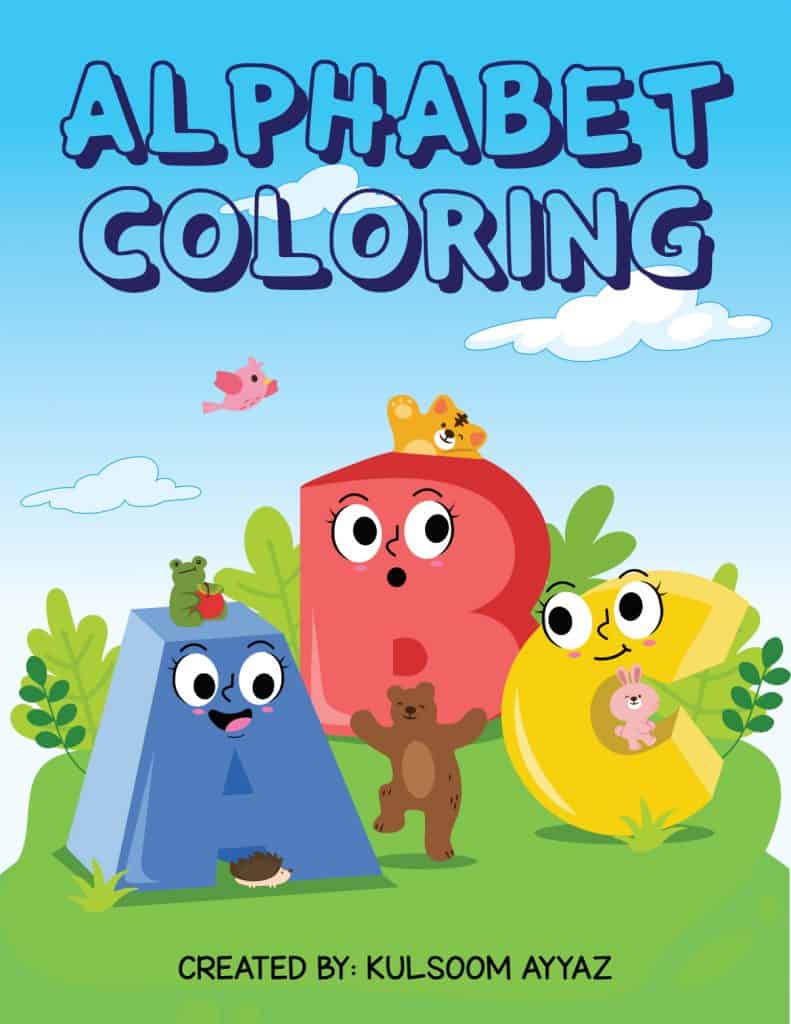
About This Book
Alphabet Coloring Workbook is a workbook of alphabet colouring pages for young children — letters presented large, with pictures, to be coloured. The destination page is headed with this post’s exact title, and the file it serves, ‘Alphabet coloring activities for kids.pdf’, carries the same material under its descriptive served filename — alphabet colouring activities, the workbook’s own work under the name the site serves it by. The workbook’s work is acquaintance before instruction: every letter met as a picture first, and known by sight before it is ever asked to be read or written.
Colouring earns its place in early literacy through a mechanism adults forget: dwell time. A letter encountered on a flashcard is seen for a second; a letter being coloured is studied for minutes — its outline followed by the eye dozens of times as the crayon works, its distinguishing features (the belly of the B, the tail of the Q) absorbed incidentally and permanently. The pictures welded to each letter do the second job, giving the shape a story and a sound-anchor before phonics formally begins, so that when reading instruction arrives, the letters are already old friends with names. There is a motor dividend as well: staying inside a letter’s lines trains the same hand control that writing will shortly demand, disguised as art. Teachers use colouring workbooks as the curriculum’s Trojan horse — the quiet table where the least ready children absorb the most, at their own pace, without ever feeling behind — and as assessment in disguise, since a child’s colouring reveals grip, pressure, and attention span at a glance. The fridge-door gallery is not vanity; displayed work tells the child the alphabet is worth exhibiting, and children rise to what their walls celebrate.
What Learners Will Practise
Knowing Letters by Sight
Learners practise recognizing each letter’s outline through long, friendly exposure. Sight knowledge laid down in colour survives into print.
Letter and Picture Pairs
The workbook practises binding each letter to its pictured word. The bond formed in play becomes the anchor phonics will pull on.
Staying Inside the Lines
Children practise guiding a crayon along a letter’s borders. Hand control trained on art transfers, quietly, to handwriting.
Key Features
The dwell-time design is the feature: letters studied for minutes, disguised as pictures. The story-anchoring is the second — every shape given a character — and the shelf fit the third, this colouring book beside this list’s tracing and activities sets. On this shelf it colours the letters here.
Who This Book Is For
Pre-readers and proud young artists are its first audience. Teachers form its second readership, stocking the calm corner that teaches. Parents make its third, curating the fridge gallery.
How to Use This Book
Say the letter’s name and sound aloud, together, while it is coloured — the ear should attend the same party as the eye. Display finished pages without ranking them; the gallery’s lesson is that every letter matters. Replace crayons before they become stubs; control is being trained, not frugality.
Related Books
The trace-and-write workbook stands at Alphabet Trace and Write Workbook, and the activities workbook at Alphabet Activities Workbook.